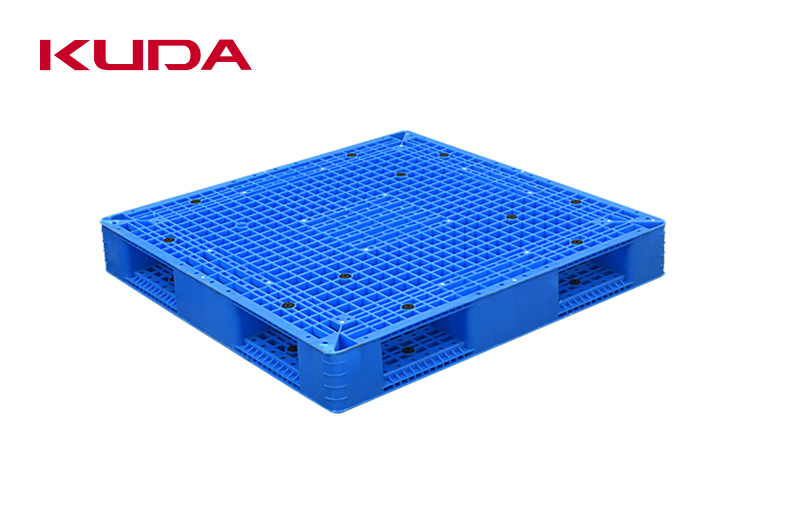
Functional applications of double-sided plastic pallets
Source: kuda 2026-01-13
Double-sided plastic pallets, with their unique design allowing use on both sides, have become efficient carriers in modern logistics. Typically made of high-density polyethylene (HDPE) or polypropylene (PP) materials, they feature flat or grid-like loading surfaces on both the top and bottom, ensuring stability for loading and unloading goods from either side. This design not only improves space utilization but also reduces the need to flip the pallets, significantly reducing operation time and labor costs. The grid structure of double-sided plastic pallets enhances ventilation and moisture resistance, making them particularly suitable for stacked storage of boxed or bagged goods in warehouse environments. At the same time, their lightweight nature facilitates handling and is compatible with various equipment such as forklifts and stackers, providing flexible foundational support for warehousing and transportation.
The versatility of double-sided plastic pallets lies at their core value. In warehousing, they support multi-layer stacking, optimizing storage space. During transportation, their double-sided design allows for loading and unloading from different directions, adapting to diverse logistics scenarios such as retail distribution or cross-industry transportation. For instance, in the food and chemical industries, their smooth surface and resistance to stains meet hygiene requirements, reducing the risk of cargo damage. Furthermore, double-sided pallets can be equipped with steel pipes to enhance load-bearing capacity, meeting the storage needs of heavy goods. Meanwhile, their standardized dimensions perfectly match shelf systems, improving automated handling efficiency and becoming a key tool for businesses to reduce costs and increase efficiency.
Double-sided plastic pallets stand out in the environmental protection field, as their durability and reusability reduce resource waste. Compared to disposable packaging, they reduce the consumption of wood or plastic through long-term recycling, aligning with the trend of green logistics. Some pallets are made from recyclable materials, further reducing the environmental footprint and responding to the global call for low-carbon transportation. By promoting double-sided pallets, companies not only enhance operational sustainability but also reduce operating costs, setting an environmental benchmark for the industry. Especially in the food and daily chemical industries, their anti-mildew and anti-corrosion properties ensure long-term stability.
With the development of smart logistics, double-sided plastic pallets are integrating with IoT technology to enable real-time tracking and inventory management. Their standardized design facilitates collaboration across global supply chains, making them the preferred carrier for multinational enterprises. In the future, double-sided pallets will continue to lead innovation, such as integrating sensors or lightweight materials, to meet the challenges of e-commerce and automated warehousing. This innovation not only reshapes logistics efficiency but also drives the industry towards intelligence and sustainability, creating greater value for enterprises.


 2026-01-13