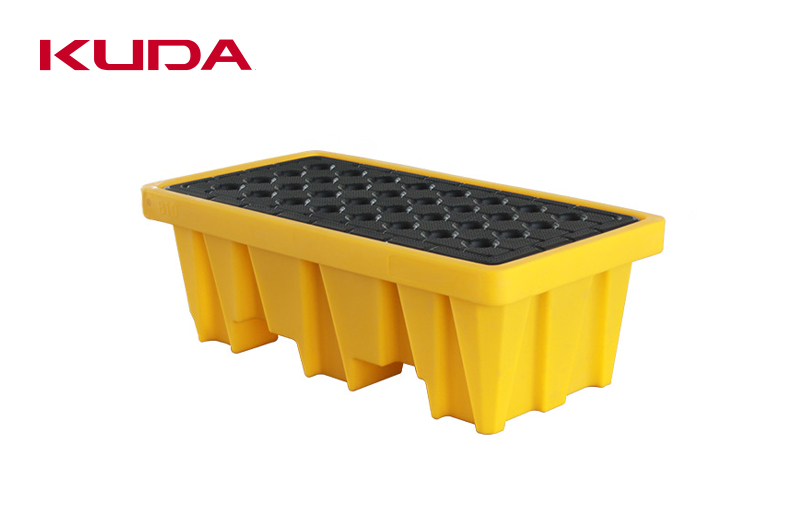
In the field of logistics and warehousing, spill pallets, as a multifunctional tray, have become an indispensable infrastructure. They not only possess the load-bearing and stacking capabilities of traditional pallets but also effectively address leakage issues during the transportation of liquids or bulk materials through innovative leak-proof designs. Such designs typically incorporate sealed edges, special coatings, or removable aprons to ensure that materials do not spill during handling, thereby significantly reducing waste and environmental pollution. The core value of spill pallets lies in their dual functionality: enhancing logistics efficiency while safeguarding material integrity, making them a crucial link in preventing losses within modern supply chains.
spill pallets are widely used in industries such as chemical, food, and pharmaceuticals, where hygiene and safety are strictly required. In the chemical industry, they prevent the leakage of hazardous liquids, reducing the risk of accidents. In the food industry, they ensure that raw materials are not contaminated during transportation, maintaining quality standards. The pharmaceutical industry relies on their leak-proof properties to ensure the purity of drugs in the supply chain. These application scenarios highlight how spill pallets, through technological innovation, meet the special needs of different industries and promote the development of logistics systems towards a safer and more efficient direction.
The innovation in spill pallets lies in breakthroughs in material science and structural design. Modern versions utilize high-strength plastics or composite materials, combined with sealed edges and removable skirts, achieving a balance between lightweight and durability. For instance, some designs incorporate modular components that allow users to adjust the level of leak-proofness according to the characteristics of the material, ranging from mild splash protection to complete sealing. This evolution not only enhances the adaptability of pallets but also reduces long-term usage costs, demonstrating how technological innovation can optimize logistics tools to better meet practical operational needs.
With the increasing awareness of environmental protection, the future trend of spill pallets focuses on sustainability and intelligence. On the one hand, material research and development is shifting towards recyclable plastics and bio-based raw materials to reduce the environmental footprint. On the other hand, intelligent designs such as integrated sensors can monitor leakage risks in real time and enhance early warning capabilities. These trends indicate that spill pallets will evolve from being a single-function tool to a comprehensive solution that integrates environmental protection concepts and intelligent technology, providing the industry with more efficient and greener options.


 2026-01-14