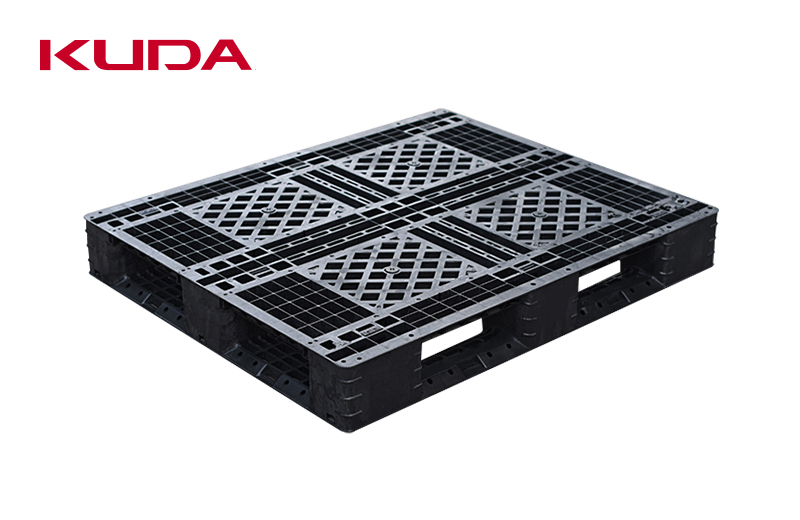
In global trade, logistics efficiency and cost control are core concerns for enterprises. Disposable export plastic pallets, due to their lightweight, durability, and no-recycling requirement, have become an ideal choice for cross-border transportation. Compared to traditional wooden pallets, plastic pallets excel in moisture resistance, pest resistance, and load-bearing capacity, making them particularly suitable for humid environments such as maritime transportation. Furthermore, their standardized dimensions facilitate automated loading and unloading, significantly enhancing warehousing and transportation efficiency. For export enterprises, the disposable design avoids the complex process of cross-border recycling, reduces compliance risks, and serves as a practical solution to international logistics challenges.
However, the environmental impact of disposable plastic pallets has sparked widespread discussion. The non-biodegradable nature of plastic products exacerbates the global plastic pollution problem, especially in developing countries where discarded pallets may be carelessly thrown away, causing ecological damage. Environmental organizations criticize the "use and discard" model as violating the principles of circular economy, while consumer demand for sustainable packaging is increasing. Despite some companies attempting to use recyclable materials, the actual recycling rate remains low, highlighting the industry's contradiction in green transformation: how to balance convenience with environmental responsibility.
Facing environmental protection pressures, the industry is actively seeking innovative paths. The emergence of bio-based plastic pallets provides a partial alternative solution, with raw materials sourced from renewable resources and a faster degradation rate, but the high cost limits its popularity. Meanwhile, the rental and shared pallet model has emerged in specific markets, reducing waste through repeated use. Technologically, smart pallets are embedded with sensors to track the status of goods and optimize supply chain management. These attempts indicate that the future of disposable plastic pallets not only relies on material innovation but also requires systemic logistics transformation.
Looking ahead, the development of disposable plastic pallets will be driven by both policy and market factors. Tightening environmental regulations in various countries may prompt enterprises to shift towards more sustainable packaging, while changing consumer preferences will accelerate the demand for green products. The industry needs to take on greater responsibility by integrating environmental protection concepts from the design stage, such as simplifying structures to reduce material usage, or collaborating with recycling organizations to establish a closed-loop system. Ultimately, balancing efficiency and ecology will be key, enabling disposable pallets to evolve from "convenience tools" to "sustainable logistics partners" and play a more responsible role in global trade.


 2026-01-10