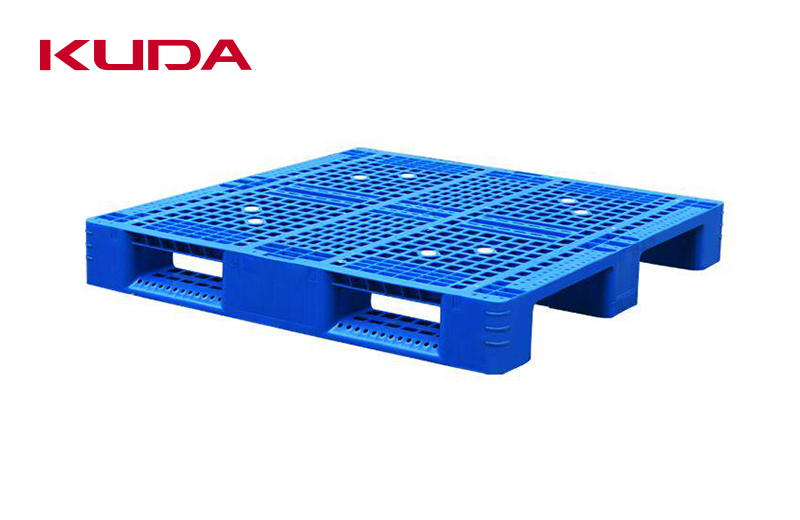
In the global logistics system, European standard pallets are undoubtedly a standardized model, and the uniformity of their size specifications is the core competitiveness. At present, the mainstream European standard pallets have two core sizes: the 1200mm × 800mm specification occupies 54% of the market share in mainland Europe, which can perfectly adapt to the 2480mm wide European truck compartment, and the double disc side by side can reserve 8cm of buffer space; The specification of 1200mm × 1000mm accounts for 36% in countries such as the UK, the Netherlands, and Finland, and is compatible with ISO containers with an inner width of 2330mm. In addition, there are auxiliary models with dimensions of 1000mm × 800mm to meet the needs of special scenarios. This unified size system allows logistics supporting facilities such as truck compartments, shelf widths, and forklift arm lengths to be designed around it, just like a unified model of screws and nuts, greatly improving the efficiency of cargo loading, unloading, transportation, and warehousing. The number of pallets that a truck can load and the planning of warehouse locations can be accurately calculated.
The design of European standard pallets embodies a pursuit of detail and practicality, combining durability and convenience. Structurally, it adopts a four sided fork design, and the spacing between the fork holes has been mechanically optimized. Forklifts can easily operate from any direction, greatly improving loading and unloading flexibility, especially suitable for automated warehousing equipment. The carrying capacity is divided into three levels according to the arrangement of goods: a static load of 1000kg when placed in disorder, up to 1500kg when placed according to conventional storage rules, 2000kg when placed according to compact rules in automated warehouses, and an additional static load of 4000kg when stacked on the bottom pallet. The total carrying capacity is up to 6000kg and can withstand a lateral impact of four tons. The plastic material is made of high-density polyethylene or polypropylene, which is corrosion-resistant and impact resistant, and has stable performance in environments ranging from -30 ℃ to 50 ℃.
In terms of environmental protection and recycling, European standard pallets are at the forefront of the industry and are practitioners of the circular economy concept. The European Pallet Association (EPAL) has established a comprehensive pallet recycling system, allowing European standard pallets to circulate between different companies and countries. After the goods are palletized on the factory production line, they may go through sea and land transportation, enter supermarket warehouses, and ultimately be recycled and reused. This model not only saves raw materials such as wood, but also reduces the problem of disposing of waste pallets. The environmental impact tax law on packaging materials introduced by the European Union requires that pallets must be able to be used multiple times, and unauthorized pallets will be taxed, which also forces companies to use standardized European standard pallets.
With the advantages of standardization, durability, and universality, European standard pallets are widely used in logistics transportation, warehouse management, international trade, and other scenarios. In logistics transportation, it can improve the efficiency of cargo loading and unloading, reduce cargo damage, and lower transportation costs, especially in the field of cross-border e-commerce. Amazon's European warehouse requires the deformation of European standard pallet stacking to be ≤ 0.5%, and the height should be controlled within 150cm (including cargo). In warehouse management, uniform dimensions make goods stack more neatly, greatly improving warehouse space utilization and preventing goods from getting damp or moldy. In international trade, European standard pallets are compatible with ISO standards, with a coverage rate of over 95% in EU countries. They support seamless cross-border logistics and avoid the trouble of frequent replacement due to mismatched pallet specifications, becoming an important support for efficient global cargo circulation.


 2026-03-07