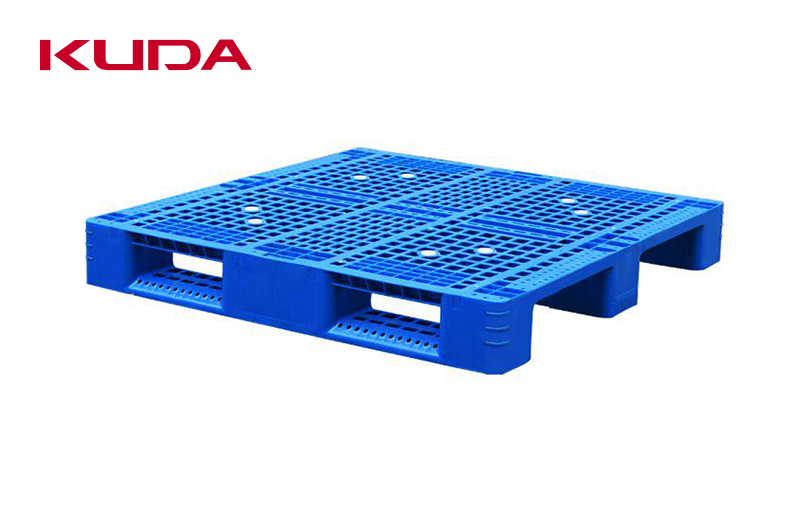
Plastic flooring, also known as plastic pallets or pallets, is a logistics equipment made from thermoplastic materials such as polyethylene (PE) and polypropylene (PP) through injection molding or blow molding processes. Its core advantages lie in lightweight design and high corrosion resistance, which can effectively replace traditional wood or metal materials and maintain stable performance in humid environments. With its four sided fork structure and modular splicing technology, it is suitable for forklifts, shelves, and cold chain transportation scenarios, becoming a core tool for global warehousing turnover.
The material selection for plastic flooring is mainly PP and HDPE, which have both impact resistance and low temperature resistance characteristics. Some products achieve fully enclosed waterproof structures through fiberglass honeycomb composite technology. Structurally, classic styles such as nine legged, Tian shaped, and Chuan shaped have been derived, and the optimized distribution of supporting feet has improved bending strength. The anti slip plate design enhances operational safety through curved surfaces and self-locking mechanisms. In 2024, patented technology will further introduce dampers and spring buffering systems, significantly reducing the risk of collision damage.
Compared to wooden pallets, plastic floor panels have the characteristics of lightweight, nail free, moisture-proof and insect proof, with a service life of 5 to 7 times that of wooden products. Its chemical resistance and flame retardant properties make it widely used in high hygiene standard industries such as food, medicine, and electronics. Cold chain specialized products can also maintain structural stability in an environment of -30 ℃. In the field of logistics, it supports the stacking and modular transportation of goods, and meets the turnover needs of precision components with anti-static design.
The recyclability of plastic flooring complies with global environmental regulations, achieving a high level of waste recycling and significantly reducing resource waste. With the implementation of the EU Packaging and Packaging Waste Regulation, its fumigation free, non-toxic and odorless characteristics have accelerated the replacement of disposable wooden pallets. The current market is dominated by double-sided and grid types, with modular splicing technology reducing maintenance costs and promoting continuous improvement in warehousing efficiency.
Despite the outstanding cost and performance of plastic flooring, heavy cargo carrying still relies on metal materials, and the initial investment is higher than traditional solutions. In the future, technology will focus on lightweighting and intelligence, such as integrating sensors for cargo tracking or further reducing environmental impact through biobased materials. Under the wave of green logistics, plastic flooring will continue to be optimized and become a key carrier for the sustainable development of the supply chain.


 2026-02-28