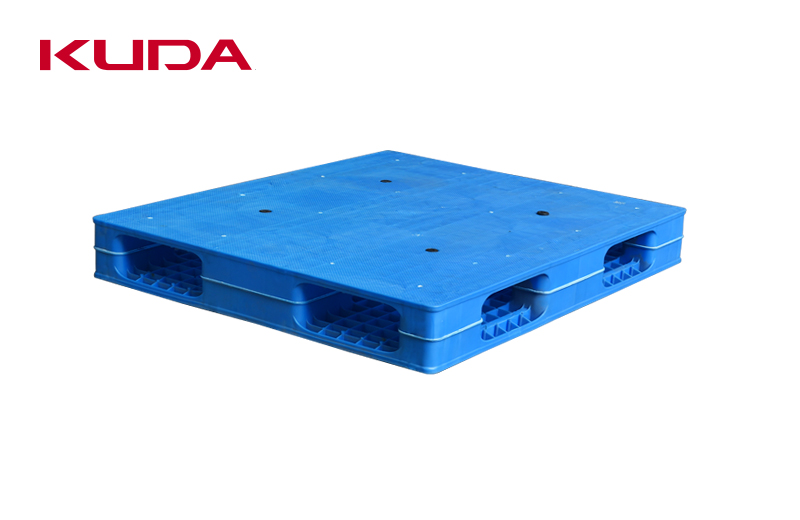
Polypropylene (PP) plastic pallets occupy an important position in the field of logistics and warehousing due to their unique material characteristics. PP is a thermoplastic with excellent rigidity and chemical resistance, capable of easily withstanding the erosion of various chemical substances and ensuring stable performance in acid and alkaline environments. Its molecular structure endows it with good resistance to bending fatigue, making the pallets less prone to deformation or cracking when bearing heavy loads, providing solid support for goods. In addition, PP has excellent heat resistance, allowing it to undergo sterilization at temperatures above 100°C, meeting the stringent hygiene and safety requirements of industries such as food and pharmaceuticals. This combination of rigidity and flexibility makes PP pallets an indispensable logistics tool for many industries.
PP trays have a wide range of application scenarios, particularly excelling in food and pharmaceutical industries as well as high-temperature environments. In the food processing industry, PP trays can withstand steam cleaning, fully complying with food hygiene and safety standards and effectively preventing the contamination of food by harmful substances. In the pharmaceutical field, where drugs have stringent requirements for storage environments, the corrosion resistance and high-temperature resistance of PP trays ensure the safety and hygiene of drugs during transportation and storage. Furthermore, in scenarios requiring high-temperature processing, such as pharmaceutical sterilization and hot filling, PP trays maintain structural stability, providing reliable protection for goods. These application scenarios fully demonstrate the excellent adaptability of PP trays in special environments.
PP trays not only excel in performance but also offer the dual advantages of being lightweight, durable, and cost-effective. Compared to other materials, PP trays are lighter in weight, facilitating efficient turnover and handling. This significantly reduces energy consumption during logistics processes and enhances overall efficiency. Their durability ensures long-term use without damage, reducing the need for frequent replacement and saving businesses substantial expenses. Furthermore, the standardized design of PP trays optimizes space utilization, increases vehicle loading rates, and further reduces transportation costs. These advantages make PP trays an extremely cost-effective choice in logistics warehousing.
When purchasing and using PP trays, it is necessary to select materials scientifically and apply them reasonably. It is crucial to choose the appropriate type and specification of PP tray based on the nature of the goods, storage environment, and usage frequency. For example, in a normal temperature, dry indoor warehouse, PP trays can fully leverage their performance advantages; however, in low temperature environments, the slightly weaker low-temperature toughness should be considered to avoid embrittlement issues. In addition, establishing long-term cooperative relationships with suppliers and ensuring the rationality of procurement plans can avoid supply and demand imbalances and improve operational efficiency. Through scientific material selection and reasonable application, PP trays can bring greater logistics benefits to enterprises


 2026-01-27