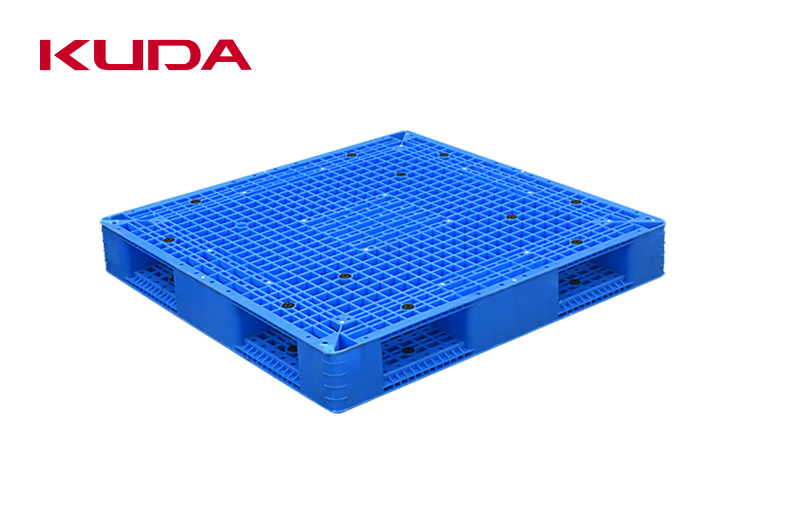
Plastic floor pallets, as a crucial component in modern logistics systems, are standardized cargo platforms made from high-molecular polymer materials. Their core value is manifested in three dimensions: modular design facilitates efficient stacking of goods, significantly enhancing warehouse space utilization; anti-slip surface patterns and reinforced edge structures ensure transportation safety, reducing the rate of cargo damage; standardized dimensions are compatible with global logistics equipment, serving as a physical link for seamless supply chain integration. Compared to traditional wooden pallets, plastic materials confer inherent advantages such as waterproofing, moisture resistance, and resistance to acid and alkali corrosion, making them an irreplaceable choice in industries with stringent hygiene requirements, such as food and pharmaceuticals.
Environmental protection revolution and circular economy practice
The environmental attributes of plastic flooring are reshaping industry perceptions. Made from 100% recyclable materials, its lifecycle can undergo multiple melting and recycling processes, forming a closed loop of "production-use-recycling-regeneration". Under the Extended Producer Responsibility (EPR) system implemented by the European Union, some companies have achieved a recycling and reuse rate of 95% for old pallets, with a reduction of 40% in carbon emissions per single use compared to wooden pallets. What deserves more attention is its ecological benefit of "replacing wood with plastic" - every use of one plastic pallet is equivalent to reducing the felling of 0.3 mature trees. This micro-change is accumulating into a macro-effect of forest protection.
Intelligentization upgrade and industry application innovation
Internet of Things (IoT) technology is endowing plastic pallets with new intelligent dimensions. Smart pallets embedded with RFID chips can track cargo location, temperature, humidity, and other data in real time, providing precise monitoring for cold chain logistics. In the automotive manufacturing sector, customized anti-static pallets have become a standard configuration for the transportation of precision electronic components. Cross-border e-commerce platforms favor foldable designs, reducing their volume by 70% when empty, significantly lowering international transportation costs. These innovative applications have transformed plastic pallets from mere load-bearing tools into data nodes and process optimizers.
Future trends and sustainable development challenges
As the global carbon neutrality process accelerates, the plastic flooring industry faces dual challenges from the material revolution: on the one hand, it needs to increase the proportion of recycled plastics to comply with increasingly stringent environmental regulations; on the other hand, the research and development of bio-based plastics is breaking through cost bottlenecks. It is worth anticipating that photovoltaic charging smart pallets are already in the testing phase, with their surface solar panels providing continuous power for built-in sensors. This evolution from passive load-bearing to active participation in energy management indicates that plastic flooring will play a more significant role in the green logistics system.


 2026-01-08