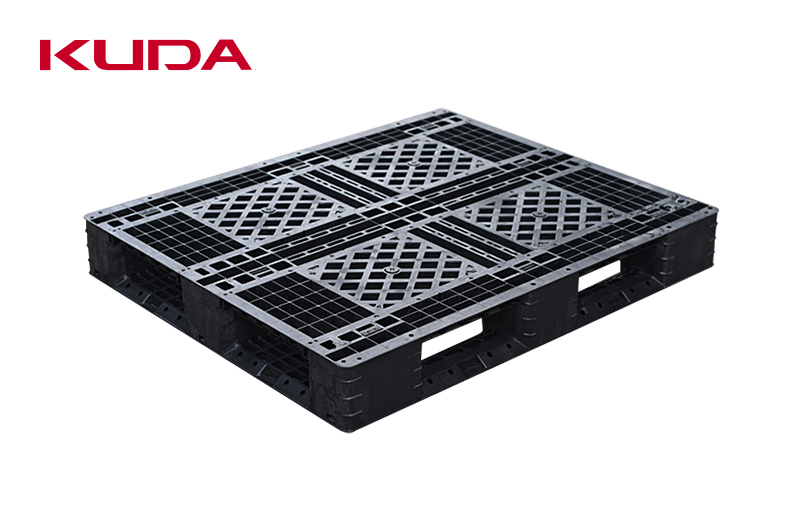
Economy and convenience of disposable plastic pallets
Source: kuda 2026-03-17
As an important carrier in the modern logistics field, disposable plastic pallets occupy an important position in the market with their unique advantages. It is mainly used for exporting goods and does not require recycling after use, perfectly meeting the efficient circulation needs of cross-border trade and greatly improving supply chain efficiency. Its material is mostly high-density polyethylene (HDPE) or polypropylene (PP), which has the characteristics of light weight, corrosion resistance, hygiene and cleanliness, and is widely used in many industries such as machinery, electronics, food, and medicine. With the limitations of wooden pallets in terms of hygiene and standardized production becoming prominent, plastic pallets have rapidly risen to become a powerful assistant in logistics transportation due to their excellent performance.
From the perspective of classification and standards, disposable plastic pallets have a clear classification system and strict regulatory basis. Divided by material, it is an important category of disposable pallets, which together with wooden, paper-based, composite material pallets, etc., form a complete category; According to structural design, there are commonly nine legged, Sichuan shaped, and Tian shaped structures, which are suitable for forklift and automation equipment operation and meet the needs of different work scenarios. The national standard GB/T 20077-2025 "Disposable Trays", which will be implemented on February 1, 2026, specifies its classification, requirements, inspection rules, and other contents, adds terminology definitions, improves testing methods, and provides production, use, management, and testing with standards that are more in line with the needs of the times, promoting the standardized development of the industry.
In terms of performance and application scenarios, disposable plastic pallets exhibit a dual nature. Its core advantages are economy and convenience, without the need for recycling, cleaning, or maintenance, which can reduce logistics costs for enterprises. In the export market, its usage rate has exceeded 68%, especially in scenarios such as cross-border e-commerce, high value-added electronic product exports, overseas transportation of food and beverages, and exhibition sample transportation.
Looking ahead to the future, the disposable plastic tray industry faces both opportunities and challenges. On the one hand, the continuous development of the logistics industry and the expansion of cross-border trade scale will bring it a broader market space; On the other hand, environmental requirements are becoming increasingly stringent, prompting companies to increase their research and development efforts to improve recyclability and environmental friendliness while ensuring performance. At the same time, with the popularization of automation and intelligent logistics equipment, disposable plastic pallets need to continuously innovate in structural design, performance adaptation, and other aspects, better integrate into the modern logistics system, play a greater role in reducing logistics costs, improving transportation efficiency, ensuring cargo safety, and providing more solid support for global trade development.


 2026-03-17