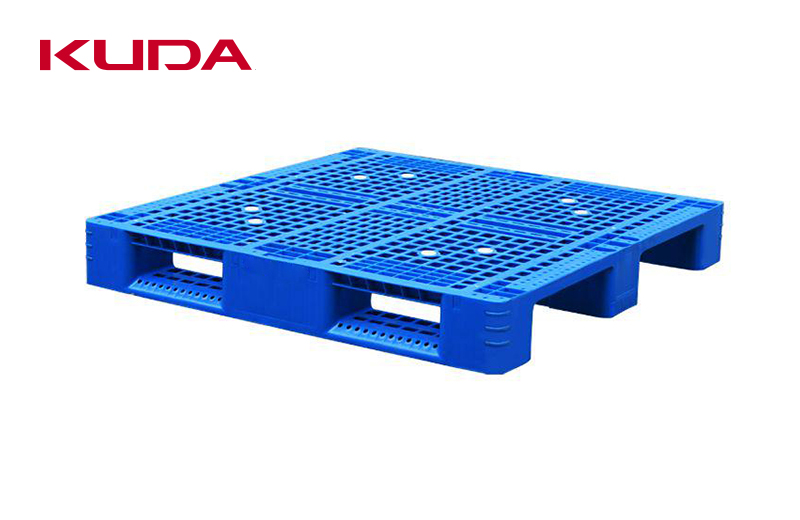
Structure and performance of grid shaped plastic pallets
Source: kuda 2026-03-13
In modern logistics and warehousing systems, pallets serve as the fundamental tools for carrying and transporting goods, and their performance directly affects the efficiency of the entire supply chain. The grid shaped plastic tray, with its unique structural design and excellent practical performance, has become the preferred choice for many industries. It is mainly made of high-density polyethylene (HDPE) or polypropylene (PP) as the main raw material, manufactured through injection molding process, with a distinctive "chuan" shaped structure at the bottom and a grid like layout on the surface, balancing load-bearing capacity, breathability and operational convenience. It plays a key role in cargo transportation, warehousing and distribution.
The structural advantage of the grid shaped plastic tray is the core of its outstanding performance. The three horizontal beams in the shape of "chuan" at the bottom form a stable mechanical support structure, which can evenly distribute the weight of goods, reduce local stress concentration, and greatly improve the overall stability and load-bearing capacity of the pallet. The normal model can reach a dynamic load of 1 ton and a static load of 3-4 tons, while the enhanced product with built-in steel pipes can increase the dynamic load capacity to 1.5 tons and the maximum static load to 6 tons, which is sufficient to meet the stacking and long-term storage needs of heavy goods. At the same time, the four-way forked design is suitable for various handling equipment such as manual forklifts, electric forklifts, and stackers. It can be operated from any direction without flipping the pallet, greatly improving loading and unloading efficiency, especially suitable for use in narrow warehouse spaces or complex work scenarios.
In addition to excellent structural performance, the grid shaped plastic tray also demonstrates outstanding applicability and safety. Its grid like surface design not only promotes air circulation and prevents goods from getting wet and moldy, but is particularly suitable for storing moisture prone items such as food and textiles. It can also reduce material usage, achieve lightweighting, and lower transportation costs. The HDPE/PP material used for the tray has characteristics such as acid and alkali resistance, UV resistance, and impact resistance. It is suitable for a wide temperature range and can be used normally in environments ranging from -30 ℃ to 65 ℃, with a service life of up to 5-8 years. In addition, anti slip rubber pads can be installed on the surface, and the edges are rounded to prevent slipping of goods without nails or spikes, which effectively prevents scratches by operators and meets export safety standards. It can even be used for the transportation of flammable materials.
In terms of environmental protection and economy, the grid shaped plastic tray also has significant advantages. It uses 100% recyclable materials that comply with strict environmental standards such as the European Union, reducing pollution to the environment. Although the initial purchase cost is slightly higher than that of wooden pallets, from a full lifecycle perspective, their long-term usage cost is lower. Plastic pallets do not require anti-corrosion treatment, are easy to maintain, and can be repaired by welding after damage, further extending their service life. At the same time, standardized size design enables it to adapt to most shelves and transportation vehicles, improving the utilization of storage space. It has been widely used in many fields such as e-commerce logistics, manufacturing warehousing, and cold chain transportation, and has become an important component of building an efficient logistics system.


 2026-03-13