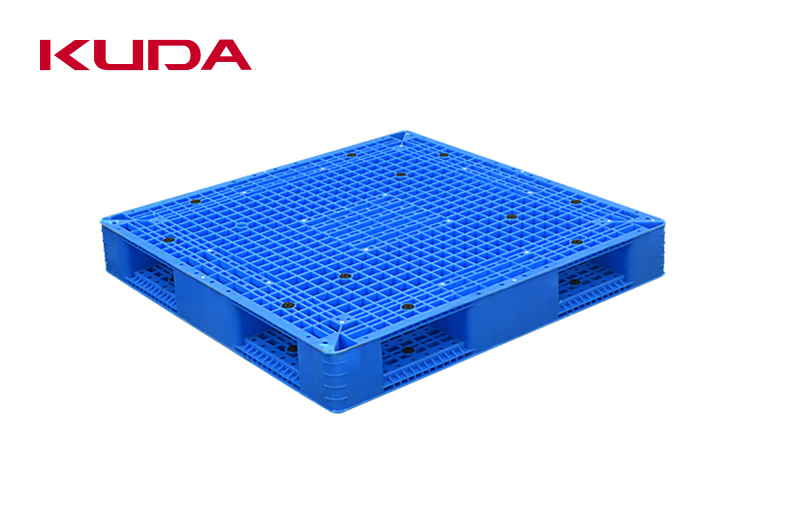
Plastic pallets, as the core tool of logistics warehousing, have reshaped the mode of goods transportation with their lightweight and high-strength characteristics. Compared to traditional wooden pallets, their durability can extend their service life by 3-5 times, and they do not require fumigation treatment, making them the preferred solution for cross-border trade. From food and medicine to automobile manufacturing, plastic pallets achieve seamless global supply chain connection through standardized dimensions (such as international specifications of 1200mm × 800mm), reducing wood consumption by over 10 million cubic meters annually.
Structural Innovation: From Nine legged Type to Intelligent Integration
The mechanical design of plastic pallets is full of wisdom: the nine legged structure can carry up to 2 tons of goods through dispersed pressure, and the T-shaped structure is optimized for automated three-dimensional warehouses, which can track the location of goods in real time with RFID chips. The anti-static model launched in 2024 further solves the safety hazards in the transportation of electronic products. These innovations have increased storage efficiency by 40% and reduced cargo damage rates by 65%.
Environmental Revolution: A Recyclable Green Footprint
Each plastic pallet is used an average of over 300 times and can be crushed and recycled to form a closed loop after being scrapped. According to industry reports, its lifecycle carbon emissions are reduced by 72% compared to wooden pallets, and there is no risk of formaldehyde release. The practice of a certain car factory in Germany shows that after fully replacing plastic pallets, the annual waste disposal cost has been reduced by 2.8 million euros.
Future outlook: Parallel development of intelligence and sustainability
With the development of 5G Internet of Things, the new generation of intelligent pallets has integrated temperature and humidity sensors to automatically warn of abnormalities in cold chain logistics. By 2025, the global market size will exceed 12 billion US dollars, with China accounting for 35%. From fields to dining tables, these silent 'logistics building blocks' are using the power of technology to construct a more efficient and green world.


 2025-12-13