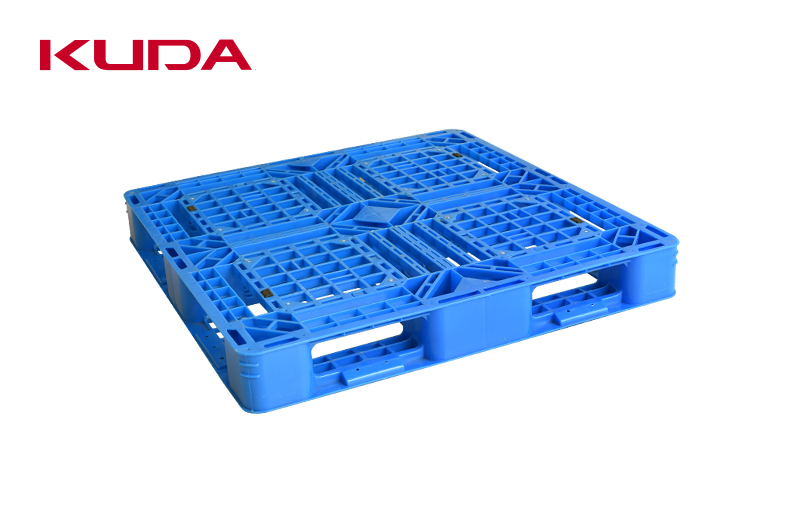
In the field of logistics and warehousing, the grid shaped plastic pallets have become the core support for efficient operation with their unique design. Its name comes from the bottom "Tian" - shaped reinforced rib structure, combined with a nine legged support system, forming a uniformly dispersed load-bearing network, significantly improving bending rigidity and stability. This structure not only effectively prevents the sliding of goods, but also achieves rapid drainage through the grid surface, avoiding water accumulation and corrosion, and adapting to humid or outdoor environments. With its lightweight characteristics, it significantly reduces transportation energy consumption while meeting the demand for heavy goods, making it an ideal choice for automated warehouses and cross-border supply chains.
The integration of materials and processes is the key to the excellent performance of grid trays. By using environmentally friendly plastics such as high-density polyethylene (HDPE) or polypropylene (PP), it is endowed with corrosion resistance, mold resistance, and impact resistance, with a lifespan far exceeding that of traditional wooden pallets. Through precision injection molding, key parts such as support feet and fork hole areas are strengthened, and the built-in steel pipe design further optimizes the load-bearing capacity to ensure toughness even at extreme temperatures. Advanced manufacturing processes also achieve uniform wall thickness and structural integrity, reduce material waste, and balance cost and durability.
In practical applications, the grid shaped tray has demonstrated wide applicability. In the food and beverage industry, it improves the utilization of storage space and reduces product damage rates; In the electronic manufacturing industry, the turnover of precision components is safer; In the agricultural sector, the transportation loss of fruits and vegetables is reduced. Its four sided fork design is compatible with forklifts and hydraulic trucks, supporting multi-layer stacking and shelf storage, especially suitable for container transportation and long-term turnover scenarios. Users should pay attention to avoiding long-term exposure to sunlight to prevent aging, and regularly clean the gaps in the grid to maintain hygiene standards.
As a model of green logistics, grid tray promotes sustainable development. Its recyclable characteristics reduce forest resource consumption and comply with environmental regulations. The surface is easy to clean and disinfect, meeting the high hygiene standards of the pharmaceutical and food industries while reducing maintenance costs. With the increasing demand for efficiency and environmental protection in the global supply chain, this type of pallet is transforming from a "behind the scenes hero" to a benchmark for technological innovation, helping companies optimize logistics processes and reduce carbon footprints.


 2025-12-11