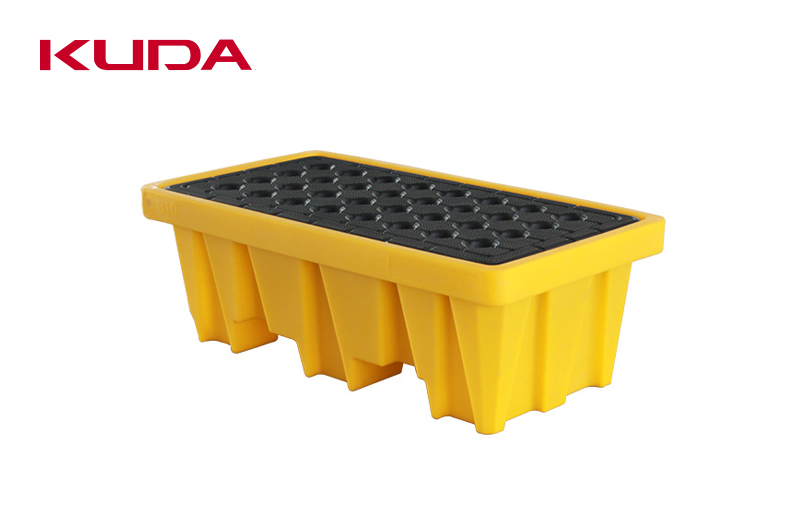
The core working principle of the anti leakage tray lies in its structured protective system. The tray is made of corrosion-resistant materials such as high-density polyethylene (HDPE) or polypropylene (PP) to form a seamless anti-seepage layer, effectively preventing liquid infiltration. The edge design is a 15-20cm cofferdam structure, which guides the leaked liquid to the collection area through fluid mechanics principles, ensuring that the leakage does not exceed 110% of the tray volume. Some high-end models are equipped with self sealing valves that automatically close the drain when a leak is detected, forming a temporary closed system. This design allows the tray to maintain stable performance even in extreme environments, significantly reducing the risk of leakage.
Material Evolution: From Basic Protection to Intelligent Response
The choice of tray material directly affects its protective effectiveness. Although traditional HDPE materials have lower costs, their chemical resistance is limited; The new fluorocarbon coated tray can resist strong acids and alkalis, greatly extending its service life. More cutting-edge innovations include biobased composite materials and intelligent self-healing coatings. The former reduces carbon footprint while maintaining standard dimensions, while the latter can automatically aggregate and repair when microcracks appear. These material breakthroughs enable the tray to maintain stability in extreme environments ranging from -30 ℃ to 50 ℃, achieving a balance between safety and efficiency.
Application scenario: Industry customized security solutions
1. Chemical industry
As the core application area of anti leakage trays, the chemical industry has the strictest requirements for trays. The tray needs to withstand long-term corrosion from corrosive substances such as strong acids and alkalis, while meeting the load-bearing requirements of heavy equipment. In the raw material storage area of the chemical plant, leak proof trays have become the first line of defense against the leakage of toxic substances.
2. Pharmaceutical industry
The pharmaceutical industry has extremely high requirements for hygiene standards, and leak proof trays play a dual role in this regard: preventing drug leakage and avoiding cross contamination. In a sterile production environment, leak proof trays have become a key equipment for ensuring drug quality.
3. Food processing industry
In the field of food processing, leak proof trays are mainly used for the storage and transportation of liquids such as oils and sauces. Its sealing design effectively prevents food contamination and meets strict hygiene standards. In slaughterhouses, beverage factories, and other places, leak proof trays have become an important guarantee for food safety.
Future Trend: Integration of Intelligence and Environmental Protection
With the advancement of Industry 4.0, anti leakage trays are developing towards intelligence. IoT sensors can monitor the status of pallets in real-time and achieve predictive maintenance. In terms of environmental protection, bio based material trays and recyclable designs have become mainstream, significantly reducing production energy consumption. These innovations make the anti leakage tray more adaptable to the requirements of sustainable development while maintaining its core protective function.


 2025-12-02