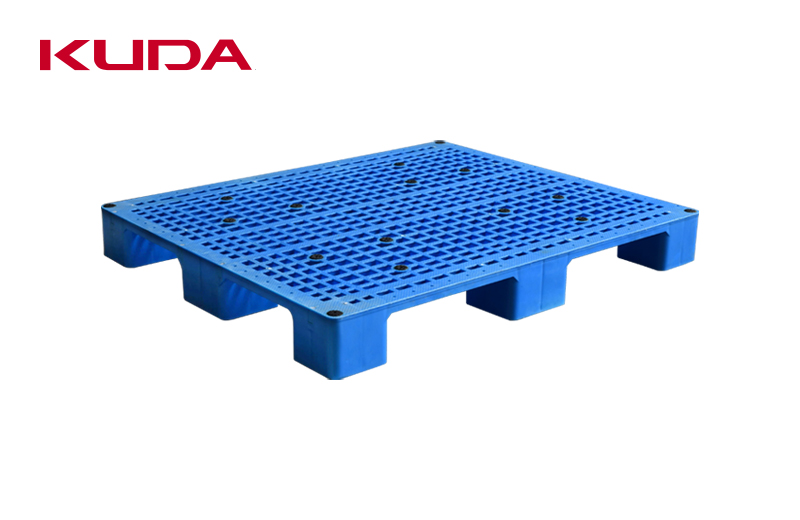
The style and load-bearing capacity of plastic pallets
Source: kuda 2025-11-27
Plastic pallets, as the core tool of modern logistics and warehousing, are gradually replacing traditional wooden pallets due to their durability, hygiene, and environmental advantages. Its diverse design styles meet the needs of different scenarios, and its load-bearing capacity is a key indicator for measuring its performance. This article will delve into the style classification and load-bearing characteristics of plastic pallets, helping users make informed choices based on practical applications.
Static and dynamic balance
The load-bearing capacity of plastic card boards is divided into static load-bearing (Stacking Load) and dynamic load-bearing (Dynamic Load), which directly affects their service life and safety:
Static load-bearing capacity: refers to the maximum weight that the card board can bear in a static state, usually 3-4 times the dynamic load-bearing capacity. For example, the static load-bearing capacity of the Sichuan shaped card board can reach 6 tons, while the nine legged card board is about 2 tons. This indicator is crucial for long-term stacking warehousing.
Dynamic load-bearing: refers to the weight that the pallet can withstand during movement or transportation, including the impact force during forklift operation. The dynamic load-bearing capacity of the T-shaped card board can reach 2.5 tons, while the nine legged card board is about 1 ton. Insufficient dynamic load-bearing capacity may lead to card breakage or cargo overturning. The load-bearing capacity is closely related to the material and structural design of the card board. For example, double-sided card boards have better dynamic load-bearing capacity than single-sided ones due to their symmetrical structure; By thickening the material and optimizing the crossbeam design, heavy-duty pallets can significantly increase their load-bearing capacity.
Collaborative application of style and load-bearing capacity
Nine legged card board: lightweight and flexible, suitable for short distance transportation and light cargo turnover, such as supermarket distribution or e-commerce warehousing. Although its dynamic load-bearing capacity is low, it is cost-effective and an ideal choice for industries with strict hygiene requirements.
Chuan shaped card board: Balancing load-bearing capacity and cost, suitable for medium-sized manufacturing and logistics centers. Its dynamic load-bearing capacity can reach 1.5 tons, which can be used in conjunction with shelves to improve storage efficiency.
Tian shaped card board: With strong load-bearing capacity, it is suitable for long-term stacking scenarios such as heavy machinery and chemical raw materials. Its static load-bearing capacity can reach 6 tons, which can effectively reduce the occupation of storage space, but the cost is relatively high. Users need to consider the weight of goods, operating frequency, and budget comprehensively when making choices. For example, the food industry can prioritize the nine legged card board, while the manufacturing industry is more suitable for the Sichuan or Tian shaped card board.
Future Trends: Intelligence and Environmental Protection
With the transformation of the logistics industry towards intelligence and green, the design of plastic pallets is also constantly innovating:
Intelligence: Some high-end card boards integrate sensors that can monitor the weight and position of goods in real time, improving warehouse management efficiency. For example, the intelligent T-shaped card board achieves cargo tracking and early warning through IoT technology.
Environmental Protection: The rise of recyclable plastic pallets and biobased material pallets has reduced environmental pollution. Lightweight design further reduces transportation energy consumption, in line with the trend of sustainable development. In the future, plastic cardboards will pay more attention to the integration of style and function. For example, modular design allows users to adjust the structure according to their needs, while nano reinforced materials can enhance load-bearing capacity while reducing weight. These innovations will drive the greater value of plastic pallets in the logistics field.


 2025-11-27